Home > Blog > Diet and Fitness
Why the Fitness Industry Is Finally Building for Whole Families
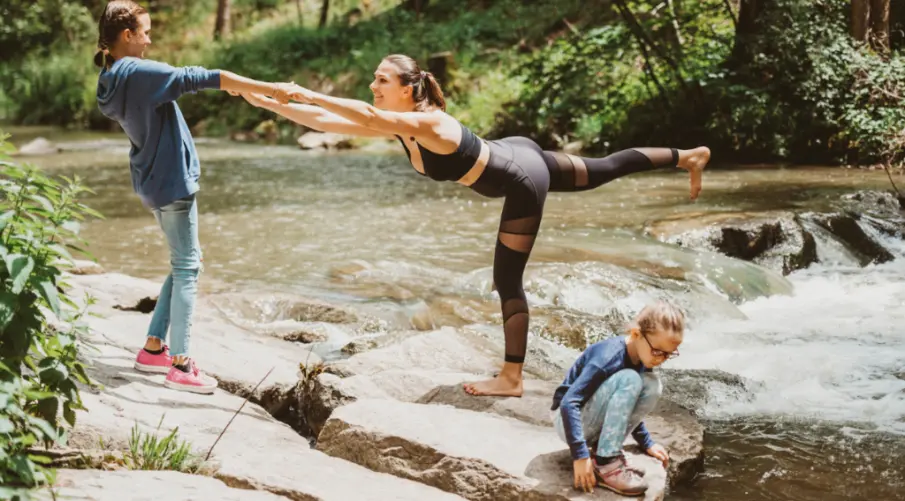
For most of the twentieth century, the fitness industry operated around a narrow set of assumptions about its customers. They were adults. They had cars. They had gym memberships. They worked out alone, or in organized classes, on schedules dictated by the facilities they paid to use. The entire infrastructure of commercial fitness — the big-box gyms, the protein shake counters, the endless rows of treadmills — was designed to serve this model, and it served it competently enough to become a multi-billion-dollar industry.
What it never quite managed was to serve everyone else. Children were afterthoughts, left to the jurisdiction of school physical education programs and recreational leagues. Older adults were tolerated but rarely centered. Communities without the economic density to support a commercial facility were simply left out of the conversation. The fitness industry built what it knew how to build: a product for the middle of the bell curve.
That is changing, and the change is coming from multiple directions at once. It looks less like a single innovation and more like an ecosystem slowly reorganizing itself around a broader definition of who deserves to move — and what those people actually need.
The Growing Case for Kids Fitness
The argument for investing in children's movement starts with data and ends with common sense. Study after study has demonstrated that children who develop strong physical literacy early in life — meaning they can move confidently, coordinate well, and understand their bodies in space — carry those capacities forward in ways that influence their long-term health, academic performance, and relationship with physical activity throughout adulthood.
And yet, the institutional pipelines for children's fitness have been weakening for decades. Physical education has been systematically defunded in cash-strapped school districts. Organized youth sports, while still popular, have become increasingly expensive and time-intensive, shutting out families who cannot afford the travel costs and equipment. Parks and recreation programs have their limits. The gap between what children need and what the system currently delivers is real and well-documented.
Into that gap, purpose-built programs focused on kids fitness have begun to establish themselves. These are not babysitting services dressed up as exercise classes. The stronger programs treat physical literacy as a genuine curriculum — something to be taught progressively, measured for improvement, and tailored to developmental stages. They understand that a seven-year-old and a twelve-year-old have different needs, and they build accordingly. The goal is not to produce athletes. The goal is to produce people who like moving and are competent enough to do it for the rest of their lives.
The research supporting this approach is consistent: early investment in children's physical competence produces dividends that compound across the entire lifespan. A child who learns to love movement in a well-designed program is substantially more likely to remain active through adolescence and adulthood, reducing long-term risks associated with metabolic disease, poor mental health outcomes, and reduced functional capacity in later years.
Kettlebell Workouts and the Return to Basics
Adults, meanwhile, are having a quiet reckoning with how they exercise. The pendulum that swung toward elaborate gym machines, complex programming, and maximalist workout cultures has begun its return. What is drawing people back is not nostalgia. It is efficiency — specifically the kind that comes from simple tools used with genuine skill.
The discipline of kettlebell workouts sits comfortably in this moment. A single bell, intelligently programmed, challenges more of the body in less time than most equipment-heavy protocols manage. The swing activates the posterior chain. The Turkish get-up trains total-body coordination. The goblet squat teaches the hips and knees to work together under load. The clean and press builds functional pressing strength without the shoulder strain that bench-heavy programs produce in people who are not professional athletes.
But the appeal is not only biomechanical. There is something culturally legible about this kind of training that resonates with people who have grown tired of fitness theater. You do not need a lot of equipment. You do not need to pose. You need to learn the movements, load them appropriately, and do the work. It is a philosophy as much as a method, and it explains why kettlebell-focused communities have a cohesion and retention rate that commercial gyms struggle to match.
This has attracted serious coaches and practitioners who treat the discipline as a craft rather than a sales pitch. The growth of this community has corresponded with a much broader recognition that functional strength — the kind that translates into everyday capacity — matters more than aesthetic measurements taken in a mirror.
Mobile Fitness and the End of Location as Barrier
The standard narrative about fitness access focuses on economics. People cannot afford gym memberships, or the gyms near them are not very good, or the hours do not work around multiple jobs and childcare. All of that is true and well-documented. But there is a geography problem that gets less attention.
In large sections of the United States — rural counties, low-density suburbs, neighborhoods that commercial real estate developers have not found worth developing — there simply are no gyms. Not bad gyms or expensive gyms. No gyms at all. The infrastructure assumption that underpins the entire commercial fitness model — that people will come to a fixed location on a regular basis — fails entirely when there is no fixed location to come to.
Operators building around mobile fitness address this directly. The model brings professional equipment, structured programming, and qualified instructors to where people already are, rather than expecting them to organize their lives around a facility's address. Some operations work from converted trailers. Others operate through appointment-based setups that rotate through communities on a schedule. The common thread is that the service travels rather than waiting to be found.
The implications extend beyond convenience. When this model operates in communities that have not previously had access to professional fitness services, it is not just filling a gap in the market. It is fundamentally expanding who the fitness conversation includes — and that is meaningful in ways that quarterly membership numbers do not capture.
The Personal Training Studio: Coaching Over Consumption
Not everyone wants to train in a warehouse gym with four hundred strangers. For a growing population of clients, the relationship with a coach or trainer is central to the experience — and small, focused environments have carved out meaningful territory here.
A well-run personal training studio operates differently from a commercial gym in almost every meaningful way. The space is smaller and more intentional. The programming is individual. The relationship between coach and client develops over time in a way that anonymous gym membership does not allow. The noise level is lower. The expectations are clearer on both sides.
This model attracts trainers who are serious about their craft. Rather than spending their days fielding questions from walk-ins and managing equipment queues, coaches in boutique studio environments work directly with clients they know, on goals they have helped define, with outcomes they can track. That professional focus produces better training, and the results reflect that.
What distinguishes the best studios is not the equipment, though the equipment is usually thoughtfully chosen. It is the culture. Coaches who care whether clients show up. Programs that evolve based on how an individual's body responds. The kind of attention that gets paid when a trainer has twelve clients rather than a hundred. The relationship between a coach and a long-term client in this environment has more in common with a mentorship than a transaction.
The model also tends to attract practitioners who are serious about professional development. The ceiling for coaching quality in a one-to-one or small-group setting is considerably higher than what the commercial gym floor allows, and the people who care about that ceiling tend to find environments where it can be reached.
A New Architecture of Fitness
What is taking shape across all of these developments is not a single trend — it is a distributed redesign of who the fitness industry exists to serve. The pieces do not always connect neatly, and they exist at different price points and in different communities. But taken together, they point toward something genuinely new: a fitness landscape that is more honest about the actual range of people it is meant to serve.
Children getting their first real exposure to structured movement in programs that understand how development works. Adults returning to foundational tools that reward skill and consistency over novelty and complexity. Communities without conventional fitness infrastructure gaining access through models that do not wait for them to come to the facility. Clients who want real coaching finding coaches who can actually help them change.
The fitness industry is a long way from fully realizing this vision, and barriers of cost, awareness, and cultural adoption remain real. But the trajectory is encouraging. For the first time in a long time, the question is not just who the fitness world serves — it is how many more people it can reach, and what it needs to build in order to reach them.
More to Read:







Previous Posts: